 Türkçe
 English
 العربية



















Anti-Spatter Agents: Their Impact on Production Efficiency and Surface Quality
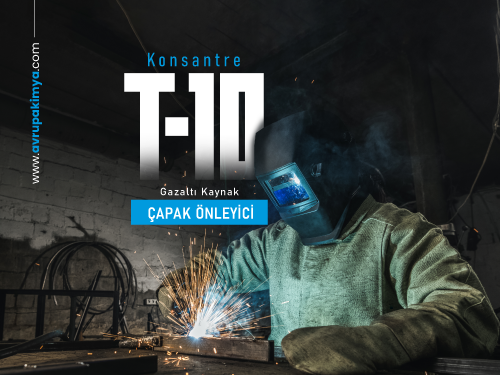
In welding processes, spatter is often accepted as an inevitable side effect of production. However, in modern manufacturing, this approach leads to significant efficiency losses and hidden operational costs that are frequently overlooked. With the right methods and high-performance chemical solutions, weld spatter formation can be largely controlled. At this point, anti-spatter applications play a strategic role that affects not only surface quality but also the total profitability of the production line. Why Does Weld Spatter Occur? Technically defined as "spatter," this condition occurs when molten metal droplets eject from the weld pool and adhere to surrounding surfaces. It is generally triggered by incorrect ampere/voltage settings, insufficient shielding gas, or the use of contaminated nozzles. In practice, it is impossible to eliminate these conditions 100%. Therefore, the real solution is not just trying to eliminate spatter formation, but—as seen in the professional chemicals developed by Avrupa Kimya—to create a film layer that prevents the spatter from adhering to the surface. Operational Advantages of Using Anti-Spatter Agents A high-performance anti-spatter agent creates a thin and durable barrier on the metal surface. The advantages provided by this barrier are felt at every stage of production: Savings in Labor Costs: Without anti-spatter, heavy labor processes such as grinding and scraping are required to clean the hard slag. On surfaces protected with the right product, spatters cannot adhere and can be cleaned with a simple brush stroke. Preservation of Surface Integrity: Mechanical cleaning processes can damage the base material. Anti-spatter agents eliminate the need for heavy cleaning, preserving the original surface quality and aesthetics. Increased Speed and Capacity: Shortening the cleaning time resolves bottlenecks in the production line and increases the number of parts produced per unit of time. Professional Solutions: Avrupa Kimya T-10 Series Every production line and welding type has different needs. Avrupa Kimya offers industrial solutions with the T-10 series, featuring different formulations for these needs: T-10 Concentrated Anti-Spatter: Ideal for businesses looking for an economical and high-performance solution. It is environmentally friendly with its water-based structure and provides effective protection on large surfaces. T-10 EXTRA: Providing spatter control in professional-grade and high-ampere welding processes, this product offers great convenience in surface preparation before painting and galvanizing; since it does not contain silicone, it does not interfere with subsequent processes. T-10 SOL (For Robotic Lines): Specially developed for torch cleaning and cooling systems of automatic welding robots. It extends the life of the torch while minimizing line downtime. The Critical Role in Automated Lines and Robotic Systems In robotic welding cells, efficiency is measured by "uptime." Spatter accumulation occurs not only on the workpiece but also within the robot's torch and nozzle system. Products like T-10 SOL are used in torch dipping or spraying units to reduce equipment contamination. This extends maintenance intervals and accelerates the Return on Investment (ROI) for robotic systems. Key Considerations for Choosing the Right Product When choosing an anti-spatter, one should look at its compatibility with the production flow, not just the price: Silicone-Free Formula: If painting or coating is to be done after welding, silicone-free products should be selected (as in the T-10 series). Occupational Health and Safety: Non-flammable, non-smoking, and odorless water-based contents should be preferred. Corrosion Protection: It is an added advantage if the product also protects the metal against short-term corrosion. Oil-Free Formula: If painting or coating is to be done after welding, oil-free products should be selected (as in the T-10 series). Conclusion: Efficiency is a Choice In today's competitive conditions, the way to reduce costs is to reduce labor and speed up processes. The use of anti-spatter agents is not just a simple consumable choice; it is a professional engineering solution that guarantees surface quality and accelerates production. The T-10 series, developed with the technological infrastructure of Avrupa Kimya, helps you turn the cleaning stage from a burden into efficiency.
Read More